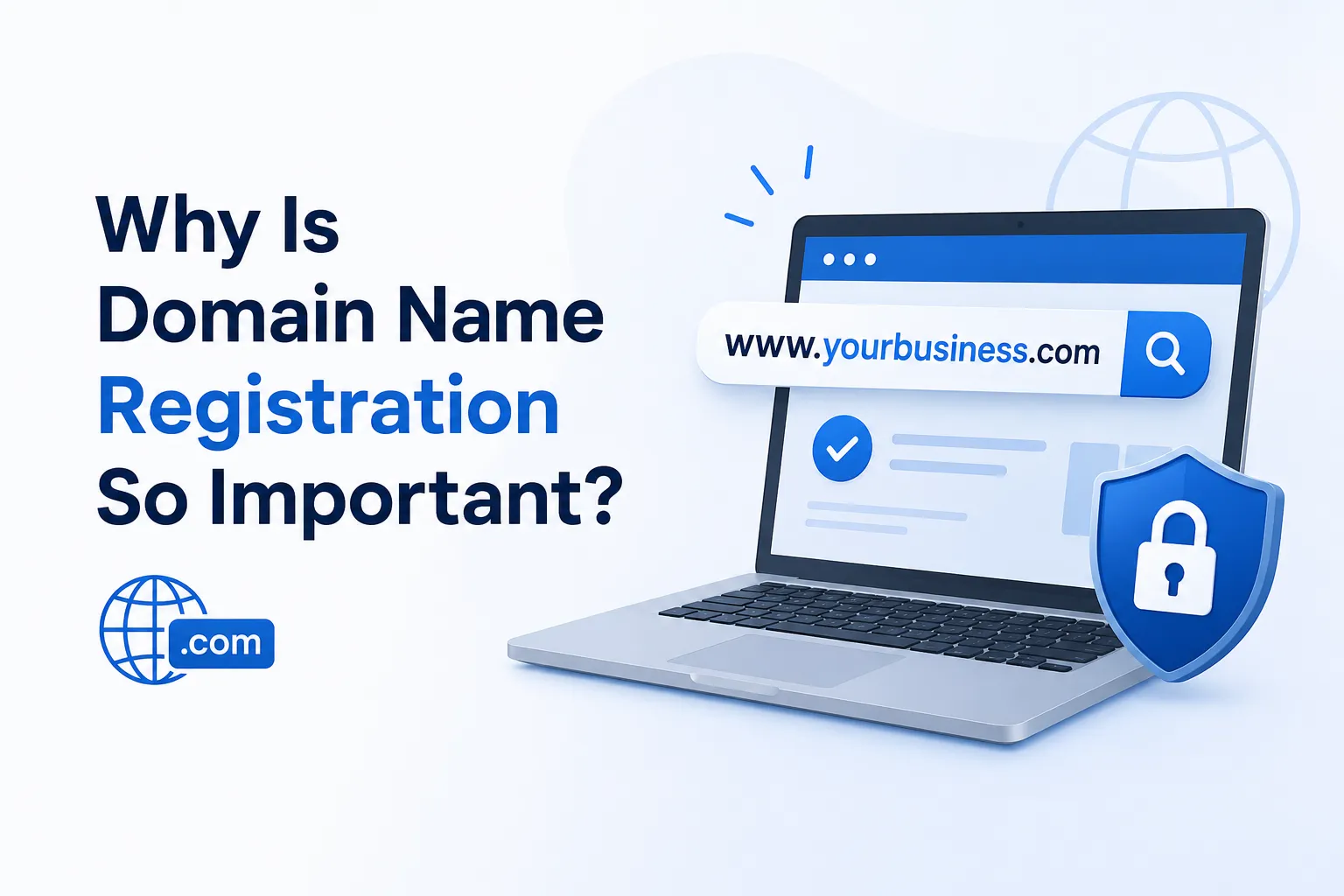
If you’re building a business or taking the plunge and going freelance, you really do need a website behind you. One of the biggest issues you can face is not purchasing and securing your web address before someone else does — you might just lose it. Think of your domain as your digital identity. People land on your site and, rightly or wrongly, come up with an opinion of you almost instantly, and your domain is a large part of what they judge. If you don’t get it registered, you’re basically leaving it for someone else to take. Competitors can take it. Squatters can take it. Bots that regularly scan available domain names can take it too, and they don’t even have to do anything with it — they can just secure the name, meaning you can’t use it. It happens quicker than you’d expect, so before you settle on any form of identity or name, you need to get hold of the domain and make it your own. Understanding how important this is gives you a real head start when it comes to building your reputation and future growth.
Let’s have a look in more detail at why an unregistered domain puts you at risk.
Domain Squatting and Trademark Issues
If you don’t jump on it and register your domain immediately, someone else can purchase it before you. It’s called domain squatting. People buy domain names matching an established brand, a new brand, or even a regularly Googled brand idea, and then sell them back to you at a serious markup. It catches a lot of people out, especially UK small businesses. You can’t assume that registering with Companies House covers your domain name, because it seriously doesn’t. Whoever ends up owning your domain can point it straight to a competitor, put something dubious up, or just park it until you’re desperate enough to pay whatever they’re asking. Going through Nominet to take it back and prove it should’ve been yours in the first place takes time and money, and you’ve got better things to do when you’re growing a new business.
You Risk Losing Control Over Your Brand
Impersonation risk is dangerous territory too. If you don’t claim your domain, someone can exploit that gap — setting up a fake site that mimics your business purely to get customers handing over personal details. So if something bad happens, unfortunately, it’s going to reflect badly on you, because it’s tied to your name, even though you didn’t have anything to do with it. Even when people catch it within 24 hours, the damage is already done. Early registration, along with grabbing similar misspellings or alternative extensions, blocks off the likelihood of this happening. It also shows search engines, customers and everyone else that you’re a consistent, verified brand, and that’s trust you can’t build any other way. Sorting all of this at the start of your business costs a lot less than cleaning up the mess afterward.
Domain Name, Search Visibility
When someone searches for a business, the search engine works in the background checking out your site. It considers how old your domain is, when it was purchased, and whether it’s easy to see who owns it, then ranks the results shown to the customer. Without the proper groundwork, you won’t appear high in search. It’s tough for new businesses, but if you hang onto your domain name and keep renewing it, you’re showing search engines you’ve got a genuine business. This builds trust. In the beginning it’s difficult, because a domain that’s just been registered, and therefore doesn’t have much content yet, won’t score highly — so the sooner you get building your website, the better. UK consumers searching for local services will often click a recognisable brand before looking at a generic domain, especially one running as a subdomain on a free platform rather than its own address. There are other benefits to owning your domain outright too — full control over your metadata, how you structure your URL, and your whole site architecture, all of which feed straight into how well you perform in search. If you want to go deeper on this, our complete guide to building a strong online brand presence covers both the branding and the technical side.
Build Consumer Confidence With a Professional Address
If you’ve got a free or generic domain, get your own address sorted as soon as you can. The moment you switch to a fully owned domain, your trust score goes up. It shows search engines you’re established, and people are far more likely to pay you or hand over personal details. If your site runs on its own domain instead of a free host, you also need an SSL certificate — that’s the little padlock on the left of the address bar in your browser. This signals trust too, and plenty of browsers will actively warn visitors if a site doesn’t have a valid SSL certificate. That’s an instant loss of trust, especially if you’re selling anything, because people won’t hand over money once they’ve been warned the site isn’t secure.
Four Things That Get Overlooked in Domain Registration
You’ve purchased your domain and instantly think the job’s done. You’re nearly there, but not quite. The next thing you need to do is ditch any generic email addresses, especially ones ending in gmail.com, and replace them with something like hello@yourbrand.com instead. People are much more likely to open these, and spam filters are much less likely to catch them.
Grab your domain name early and you also take away the risk of any price hikes once your business starts doing well. There’s a marketing payoff too — you want to be able to print your full domain address without any subdomains attached. It’s also worth grabbing all the related extensions for your business. If you’ve got .co.uk, you should also pick up .uk and .com, because that’s exactly where squatters wait to get in, either holding them hostage for a higher price or putting up dummy duplicate content that people assume is yours.
So How Do You Find a Name That Works?
Calling your business Little Gems Wholesome Bakery Denver does clearly say what you do, but it’s way too long for a website. You need something easy to type and remember, that gives people a sense of what you do just from reading it. Avoid hyphens or numbers, because people get genuinely confused by them. A keyword can potentially lift your search ranking a little, but overload it and you just look like spam, which undoes any benefit. Before registering your domain, make sure you’ve selected a memorable name that supports your branding strategy. If you’re still deciding on the right name, read our guide on 5 Reasons Why Your Business Needs a Memorable Domain Name to learn how choosing the right domain can strengthen your brand and improve long-term marketing efforts. Check the name’s free on social media too, because some brands only exist there and don’t own the matching domain — if they’re already established, they’ll be in your way. If you want your SEO foundations reviewed by specialists, this is a good time to line everything up and get it done in one job. Google can also help with technical rundowns, especially if you’re registering your domain through Google Cloud. Whatever registrar you land on, one thing doesn’t change. Lock the name down early. Stay on top of it.
How to Keep It Secure Once You Own It
Registered your domain? Good. Still not done though. There’s a breather, sure, but you can’t just forget about it, because most registrations only run one to three years before renewal’s due. Most registrars will remind you, but you still need to be on it, because if it lapses back to the general public, anyone can buy it. Turn on auto-renewal and put a registrar lock on to make sure it stays yours. WHOIS privacy keeps your details off the public record, which means fewer phishing attempts aimed at you — it’s definitely worth using.
Create a simple checklist to review expiry dates on everything you own, along with your DNS settings, nameserver configuration and SSL certificates. Any of these slipping can cause downtime for your business, which has a knock-on effect on customer trust and search rankings. Managing your domains strategically is what separates UK businesses that do well from those that don’t. A well-maintained domain is your shopfront on the busiest high street in any town — always open, and always where people expect to find you.

Logicsofts Admin
webadmin
Ready to Transform Your B2B Marketing Strategy?
Get a comprehensive SEO audit and discover how to drive more qualified leads to your business.
Get a Free SEO Audit