
ASO vs SEO are both means to get in front of users without the use of ads; however, each operates in a different area – the one is within app stores, and the other is across search engines.
We explain how they differ, how quickly each method delivers results, and how both together sustain growth in visitors and installs.
What SEO Actually Means
SEO is basically the act of making a website more visible in search results. The ultimate goal is to get people who are already interested in your topic, product, or service to visit your site.
This method, therefore, increases trust and brings up the brand steadily in search results.
SEO is based on the three main aspects:
- Technical setup: for example, a well-organized site, quick loading time, and a site that is friendly to different screen sizes.
- On-page work: correct and efficient use of keywords in the titles, texts, and the user’s search queries, matching words in the headings.
- Off-page factors: links from authorized and trusted sources that show to Google that the site is reliable.
It would probably be our main advice that you find out first how brands employ SEO as part of their marketing strategy before you make a decision to use SEO for your brand.
One of the best examples of that relationship is the Clever Cleaner official website. Its optimized content attracts users who later move toward the app, thereby demonstrating how SEO vs ASO can be used in tandem to enhance overall visibility.
What ASO Means and Why it Matters
This section explains how app search engine optimization (ASO) helps an app rise in store search results and reach users who are ready to download.
With ASO, our goal is to raise the app’s visibility, make the conversion process smooth, and create the user’s trust – these are three elements that determine the frequency of people selecting one app over another.
The idea is similar to SEO; however, it is done locally in mobile stores, where the algorithms are changing fast and are very reactive to user activity.
The title, category, and brief should inherently be phrases that depict the users’ method of searching for an application. Graphics, captures, and a small clip of the application functioning should give the potential user an immediate idea.
The number of stars, user comments, and quantity of downloads are the factors that indicate the app’s standard and are the means to maintain its spot in the store.
It is our recommendation to examine the self-presentation of competitors’ apps in the store.
For example, apps that help free up iPhone storage show their purpose directly in the title, subtitle, and description. Each element explains what problem the app solves, so potential users understand its value at once.
Clear communication remains the strongest part of any ASO strategy.
Difference Between ASO and SEO in Practice
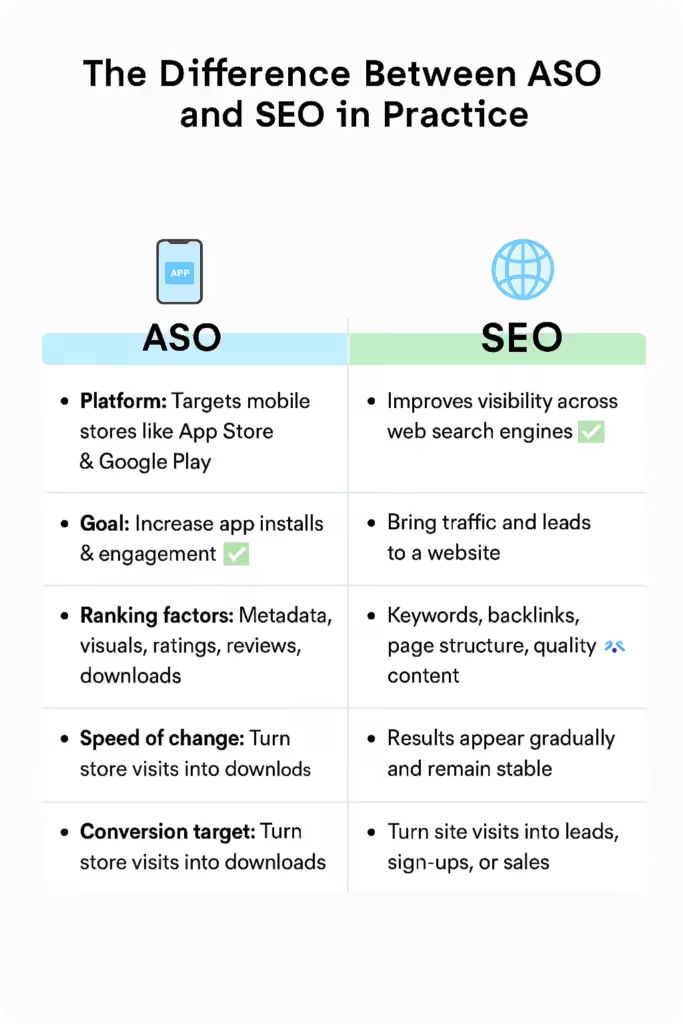
In order to grasp the functioning of these mechanisms, we shall explain the primary distinction between ASO and SEO.
Both strive to achieve the same end, that is, to attract users without incurring advertising costs, but they operate in different worlds and depend on different factors to be ranked.
After that, we will demonstrate their core differences one by one so that you can understand how each of them works and where they intersect.
Major distinctions:
- Platform. SEO helps a website to be more visible on search engines such as Google or Bing, whereas ASO is done to improve a product’s visibility in a mobile platform like the App Store or Google Play.
- Goal. The objective of SEO is to bring more traffic to a website and thus generate more leads. Conversely, ASO is about increasing the number of app downloads and store listing engagement.
- Ranking factors. The ranking of SEO is determined by the main keywords, the quality of the content, the number of backlinks, and the technical side of the website. Whereas ASO relies on the changes made in the app store listing (metadata), the visuals, the ratings, the reviews, and the number of downloads.
- User intent. SEO users look for knowledge, services, or comparisons. ASO users look for immediate tools or apps that solve a problem.
- Speed of change. SEO results are not visible immediately, and they are quite stable over time. On the other hand, ASO performance depends greatly on the number of installs and user reviews; hence, it is a very volatile situation that can change rapidly.
- Conversion target. The primary objective of SEO is to bring different types of user interactions, such as website visits, sign-ups, or purchases. While ASO is simply about getting the users who have seen the store to download the app.
We recommend viewing these points as two sides of one strategy. While SEO is the one that brings recognition to a brand, ASO is the one to makes users aware of the brand to install the app directly.
Key ASO Ranking Factors to Track
This part provides the major ASO ranking factors that decide your app’s visibility and ranking in the store search results. These factors affect how users see your product, how reliable they think it is, and how likely it is that they are to download it. To be able to maintain the good performance, each factor should always be taken into consideration and updated regularly.
We outline the elements that affect the ASO results the most below:
- Title and subtitle. Must include your main keywords and clearly describe what the app does. A precise title helps users find your app faster and gives algorithms a clear signal of relevance.
- Description. It should briefly, in clear and direct sentences, convey the main features and advantages. When the description corresponds to the actual queries of users, the app gets more visible naturally.
- Visuals. The app value should be understood at the very first glance through the help of the chosen visuals, which can be the app-related icons, a screenshot, or a short preview video. Often, it is the clear visuals that decide whether users install the app or skip it.
- Ratings and reviews. Positive feedback is one of the ways to confirm the product or service’s trustworthiness. Downloads and retention. Both figures are a reflection of how users are engaging with your app. The constant stream of installs and the presence of loyal users are what make it possible to keep a high ranking over time.
We advise you to look at those elements after each update. Even small changes in metadata, visuals, or responses can shift your ranking within days.
In a Reddit thread, numerous developers have weighed ASO effects against Apple Search Ads ones. They mentioned that ads lead to quicker installs, whereas ASO on-page optimization contributes to more consistent results and higher retention. The user response is in line with what ASO is all about – it takes time, but it makes an app more and more visible and reliable in app stores by stable updates of titles, descriptions, and creatives.
When to Use SEO, ASO, or Both
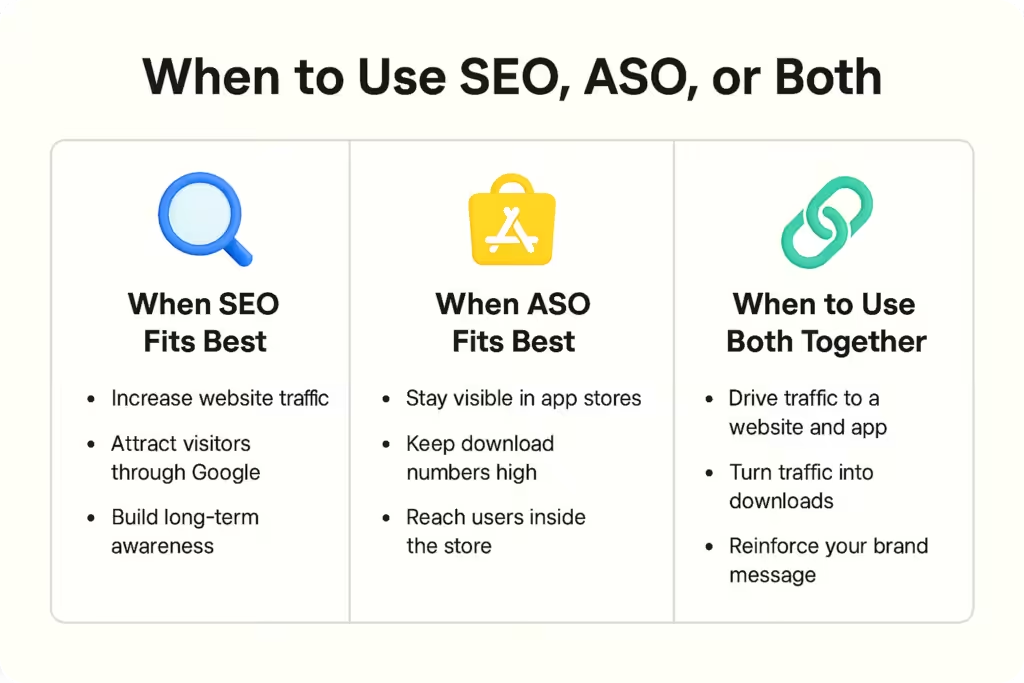
This section explains when each method works best and how to connect them for stronger results. Both improve visibility but serve different purposes. It also outlines how to choose the right one and when to combine them for the best outcome.
When SEO Fits Best
Our suggestion for SEO is that when the primary aim is to increase the flow of visitors to the site and, gradually, earn the confidence of the users.
- Works well for websites, blogs, and online stores that depend on search visibility.
- Helps attract visitors through Google and other search engines.
- Supports lead generation and long-term brand awareness.
- Helps to bring in steady results through consistent content and updates.
When ASO Is The Best Option
We recommend ASO for your mobile application if your product is a mobile app and you want to increase organic installs.
- Perfect for applications that intend to be the top-most visible on the App Store or Google Play. Generates a good return on ad costs that goes along with a high number of downloads.
- Makes it possible to keep an app in a competitive market if it is updated with new versions regularly.
- Finds users who are searching for specific tools in the store.
When to Use Both Together
It is better to use both methods in a complementary way when your brand has a website and a mobile app.
- SEO leads the users from content and search results to the app page.
- ASO makes the most of the visits, getting downloads, ratings, and reviews.
- Common keywords serve your website and app with a single transparent brand message.
The section explained what distinguishes SEO from ASO, the moments when each of them should be utilized, and how they cooperate as a single efficient plan.
Conclusion
Finally, we would like to share a few thoughts. The interplay between SEO and ASO is a great example of how the market is moving towards integrated visibility, where a web presence and an app presence are considered as one. Companies that treat them as a single system gain a clear advantage in reach and trust.
Brands are competing with more tools and services for consumer attention, and the distinction between search optimization and app store optimization is becoming less and less clear. While users on the internet are in search of answers, those in app stores are looking for the most straightforward solutions. Brands that manage to meet both these needs at the same time increase their loyalty and growth at a much faster rate. We recommend that you take a closer look at this transition.
Check how your application and website work to support each other, have similar keywords, and utilize shared topics to lead users from content consumption to installation. State-of-the-art SEO and ASO activities are the main factors that determine a brand’s visibility and its stay in a very competitive environment where new apps are launched every day.

Ready to Transform Your B2B Marketing Strategy?
Get a comprehensive SEO audit and discover how to drive more qualified leads to your business.
Get a Free SEO Audit